TopEndSTS: Who are we?
Meet our current members below. We welcome others who would like to be involved – either remotely or in Darwin.

Matt has spent most of his time in the past 20 years working with Aboriginal people on issues of land, research and livelihoods. His primary research interest is in exploring the political and epistemic aspects embedded within work where Indigenous and non-Indigenous people undertake action together. Throughout his professional career he has written and published, drawing on real life examples from applied work to detail the challenges and rewards of work in complex situations..

Nori is a coordinator of Yolŋu Studies at Charles Darwin University and has recently been involved in establishing the First Nations Sovereignty and Diplomacy Centre. His background is in community education, community development and cross-cultural and cross-linguistic communication. His research interest involves collaborative work with Yolŋu knowledge authorities in East Arnhemland in the area of Yolŋu governance and decision making process, which he believes, embedded in Yolŋu worldview and its value, including the use of Yolŋu languages.
.

Jennifer is a Research Associate with the Northern Institute. She recently completed her PhD with the Research Institute for the Environment and Livelihoods at CDU. Her work involves working from the ‘Ground Up’ with Indigenous knowledge authorities. This involves collaborative research for policy development, engaging with Indigenous people, government and service providers. The current project is focused on remote government engagement and coordination and she is working specifically with local Indigenous researchers in Ngukurr.
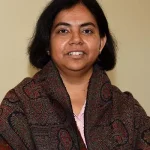
Deepika is a Senior Research Fellow at the Northern Institute, Charles Darwin University and is based at the Alice Springs campus. The focus of her research is examining ways regional, remote and very remote areas can be made more sustainable through better waste management. In particular she has been conducting research on minimising construction waste generation and waste from solar energy systems.
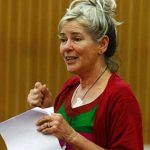
Leonie has grown up in Arnhemland in a mixed cultural environment. She has published children’s books, set in remote communities and written in a combination of English, Kriol, and other Indigenous languages. Her work has won (or has been shortlisted) for most Australian literary awards.

Anna works as an honorary lecturer in Resources, Environment and Development at the Crawford School of Public Policy and formerly based at the ANU Institute for Climate, Energy & Disaster Solutions. Before joining ANU, she held postdoctoral research and teaching roles at the University of Melbourne. Over more than a decade, she has worked on international research programs and collaborative projects examining resource and environmental governance in Indonesia and Southeast Asia.
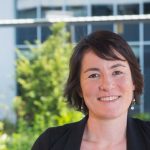
Michaela is a Senior Research Fellow with the Northern Institute at Charles Darwin University. Her current research involves working from the ‘Ground Up’ with Indigenous knowledge authorities, and differing traditions of knowledge and governance. This involves collaborative research for policy development, and engaging with government, service providers, university staff and Indigenous people in remote communities. This work drives her current interest in how social science may recognise itself as an active participant in contemporary governance practices, and as working at the interface of differing means for knowing and governing Australian people-places.

Christine recently completed her PhD studies at Charles Darwin University having formerly been the Head of Collections at the Museum and Art Gallery of the Northern Territory. Christine has specialised in management of the intellectual and physical integrity of museum holdings in art, ethnography, history and science. In an early career as an archaeologist, Christine has directed excavations, project managed major research and rescue projects and ran public programs that enabled interpretation of discoveries as they unfolded.

Helen Verran is an ethnographer. The question that animates much of her teaching, research, and scholarly writing is ‘How can ethnographic approaches to research contribute in an era when numerics, algorithms, and big data increasingly dominate decision making?’ In the absence of ethnographic approaches, first person experience becomes irrelevant in the knowledge work that informs policy and governance. Too much of what it means to be human becomes lost and missing. Helen has worked in the Northern Territory on and off since 1987. Most of her work has been with Indigenous organisations particularly focussed in Arnhem Land. She has investigated use of digital technologies, environmental management, and provision of education in remote Indigenous settlements.

Simon’s research explores how people make sense of their relationships with the natural world, in an era of complex social and environmental change. In particular, Simon is interested in how these meanings shape perceptions of and responses to sustainability challenges, as well as how they are communicated and enacted through management, policy and governance.

Sam is a PhD candidate and Research Associate at the Northern Institute, Charles Darwin University. Trained as an anthropologist, Sam worked for several years at the Northern Land Council before commencing his doctoral studies working with Elders in Maningrida, north central Arnhem Land.

Trained as an anthropologist, Kirsty’s research considers Indigenous, customary and community values, relationships with and resource responsibility for tangible and intangible environments in Australia, Ghana and, to a lesser extent, Germany. Her work sits at the intersection of cross-cultural approaches to environmental disasters such as flooding, invasive species incursions and loss of biodiversity. Kirsty is currently undertaking a research fellowship in partnership between the School of Culture, History and Language and the Institute of Climate, Energy and Disaster Solutions, the College of Asia and the Pacific, Australian National University (ANU) and the Water Security Program, Environment Business Unit, Commonwealth Scientific and Industrial Research Organisation (CSIRO).